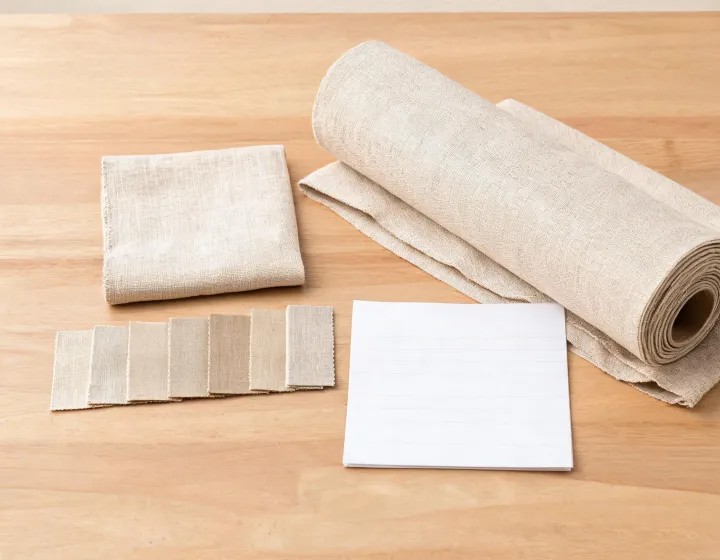
Give every sample a specific job
01 / discoveryScreen the swatch
Use an identified swatch to discuss fiber composition, weave, yarn count, hand feel and opacity. Ask whether it is cut from the proposed article and finish. A discovery sample can narrow choices, but it does not reserve stock or commit a mill to a bulk delivery date.
02 / appearanceApprove the relevant appearance reference
Separate a lab dip from a strike-off. Record the color reference, lighting or viewing basis, artwork revision and permitted variation. For a solid linen brief, print approval may be unnecessary; for custom printed linen, a color dip cannot settle motif scale or registration.
03 / production basisConnect the sample to the proposed bolt
Capture the supplier article code, finish sequence, target GSM, usable width, requested roll length and quantity unit. An illustrative request of 500 m across specified colors still needs per-color allocation, roll-length tolerance and a shade-lot policy; this figure is an example, not an order minimum.
04 / release decisionRetain evidence for bulk review
Identify reviewer, sample date, accepted deviation and any remaining conditions. Ask how roll inspection, shade grouping, packing and test reports will be tied to the bulk lot. Approval of one sample is limited when composition, finish or production conditions later change.
Choose the route against budget and risk
Stock linen may fit a brief with fewer development stages but limits available construction choices. Custom linen may better align a width, handle or finish while adding minimums and approval work. Compare sampling, test charges, usable yield and delivered scope rather than the fabric unit price in isolation. High-end, mid-range and budget remain buyer preferences with no implied supplier certification.
Agree verification before measuring
For shrinkage and colorfastness, specify the intended care exposure, method and edition, specimen conditioning, laboratory identity and pass threshold in the testing request. Keep raw results and sample references with the approval record. The AATCC methods resource provides method context, not evidence that a linen product passes. A report for a different fabric or finish cannot close the question.
Return to bulk inquiry options, review quotation fields, or read the full procurement brief before assigning the next approval.